Mood Living | Sustainable Materials Guide
Eco-Friendly Materials for Interior Design in Sydney: A Practical Guide
Eco-friendly material interior design in Sydney starts with choosing finishes, furnishings and fixtures that suit your home, last well and avoid unnecessary waste. The best material is not always the newest or the one with the most impressive green label: its origin, durability, maintenance, indoor-air impact and end-of-life options all matter.
At Mood Living, we believe considered material choices can work beautifully with modern, contemporary and timeless interiors. This guide explains what to look for in flooring, timber, paint, textiles, benchtops and furniture, and how to compare environmental claims before buying.
Planning a home update? Explore our Sydney residential interior design and contemporary sustainable interior design guide.
What Are Eco-Friendly Interior Design Materials?
Eco-friendly materials are products selected with attention to their environmental and health impacts across sourcing, manufacturing, transport, installation, use and disposal. There is no single material that is automatically sustainable in every situation. For example, recycled content may be valuable, but a product that fails quickly or cannot be repaired may still create substantial waste.
Quick answer: For many Sydney homes, sensible starting points include responsibly sourced or reclaimed timber, durable recycled-content surfaces, low-emission paints and adhesives, washable natural-fibre textiles, and furniture designed to be repaired or reupholstered. Compare independent certifications and product documentation rather than relying on words such as “green”, “natural” or “eco”.
1. Responsibly Sourced and Reclaimed Timber
Timber can add warmth and texture to floors, cabinetry, shelving and furniture. Look for suppliers who can identify the timber species, source and chain-of-custody information. FSC or PEFC certification can help substantiate responsible forestry claims when relevant to the specific product.
Reclaimed timber can extend the life of existing material and add character, although availability, condition and finishing requirements vary. Engineered timber products may make efficient use of wood, but also assess adhesives, surface coatings and repairability.
For Sydney apartments and townhouses, consider acoustic requirements, strata rules and moisture exposure before selecting timber flooring. A beautiful material only performs well when it is appropriate for the room.
Read about modern interior design in Sydney.
2. Low-VOC Paints, Finishes and Adhesives
Paints, sealants, coatings and adhesives can affect indoor air quality through volatile organic compound (VOC) emissions. Where practical, ask for low-VOC or low-emission products with credible test results, and check the full system: primer, paint, adhesive and sealant.
Low-VOC does not necessarily mean zero emissions or suitable for every person. Read safety data sheets, follow the manufacturer’s application instructions and ventilate during and after installation. For homes with children or sensitive occupants, discuss product selection with an appropriate professional.
When repainting, a restrained colour palette can make rooms feel cohesive without replacing otherwise functional furniture. This is especially useful in staged or budget-conscious updates.

3. Natural, Recycled and Long-Life Textiles
Upholstery, curtains, rugs and cushions are opportunities to make more considered choices. Linen, wool, cotton and other natural fibres may be suitable, but their production, dyes, treatments and care needs differ. Recycled polyester can use recovered material, yet synthetic fabrics can shed microfibres during use and washing.
For busy family homes, durability and cleanability are often as important as fibre content. Ask about abrasion ratings for upholstery, fabric composition, stain treatments, washing instructions and replacement covers.
Certifications such as OEKO-TEX STANDARD 100 relate to testing for certain harmful substances; they should not be treated as proof of a product overall environmental sustainability.
Explore affordable interior decorating services for ideas on refreshing rooms without major works.
4. Recycled-Content and Durable Benchtop Materials
Kitchen and bathroom benchtops are often high-impact purchases because fabrication, transport and replacement can be resource intensive. Options may include recycled glass composites, stainless steel, selected ceramic or porcelain surfaces, and reclaimed materials where appropriate.
Rather than selecting by appearance alone, compare scratch resistance, heat tolerance, sealing, repair options, warranties and local fabrication availability. Some composite surfaces use resins, so check product details and installation practices.
Important Australian safety note: Australia has prohibited the manufacture, supply, processing and installation of engineered stone benchtops, panels and slabs containing crystalline silica, subject to limited exceptions and jurisdiction-specific arrangements. Do not specify a prohibited engineered-stone product for a Sydney renovation. Confirm current NSW requirements and suitable alternatives with licensed professionals.
5. Furniture That Can Be Repaired, Reused or Reupholstered
One of the most effective ways to reduce material waste is to retain quality furniture that still functions well. A dining table can be refinished, a chair reupholstered and a storage unit repurposed before purchasing a replacement.
When buying new furniture, prioritise sturdy construction, replaceable parts, practical dimensions and finishes that suit your household. A well-made piece used for many years can be a better decision than a short-lived trend purchase, even if the latter is marketed as eco-friendly.
Our Sydney renovation design content also explores planning a cohesive look around what you already own.
6. Flooring Choices for Sydney Homes
Flooring selection should account for lifespan, comfort, acoustic performance, moisture, cleaning and the suitability of the existing subfloor. Consider the following possibilities:
- Reclaimed or responsibly sourced timber: warm, repairable in some formats and suitable for selected living spaces.
- Linoleum: a distinct material from vinyl, often made using ingredients such as linseed oil and wood flour; check manufacturer composition and care instructions.
- Cork: comfortable underfoot in suitable locations; assess finish, moisture tolerance and wear.
- Durable tile: potentially long-lasting for wet areas, although production and installation impacts vary.
- Existing flooring: refinishing or restoring a serviceable floor may avoid substantial replacement waste.
For apartments, always confirm strata and acoustic requirements before installation. For wet areas, waterproofing and slip-resistance requirements take priority over aesthetic preferences.
How to Compare Eco-Friendly Material Claims
Product marketing can make two materials look equally sustainable even when their evidence differs. Use this practical checklist before specifying finishes:
Origin and traceability
Ask where the material came from and whether the supplier can provide evidence of responsible sourcing.
Emissions and indoor air
Review relevant VOC or emissions test information for paints, boards, sealants and adhesives.
Durability and repair
Compare expected lifespan, maintenance, repair options and availability of replacement parts.
Third-party evidence
Look for current, product-specific certifications, environmental product declarations or credible test reports.
Transport and waste
Consider local supply, packaging, offcuts, take-back programs and recyclability where practical.
Real-world suitability
Check performance in sunlight, humidity, wet areas, high-traffic spaces and family households.
Environmental Product Declarations (EPDs) can provide standardised lifecycle information, but they are not automatically proof that one product is environmentally superior to another. Compare like-for-like products and relevant performance requirements.
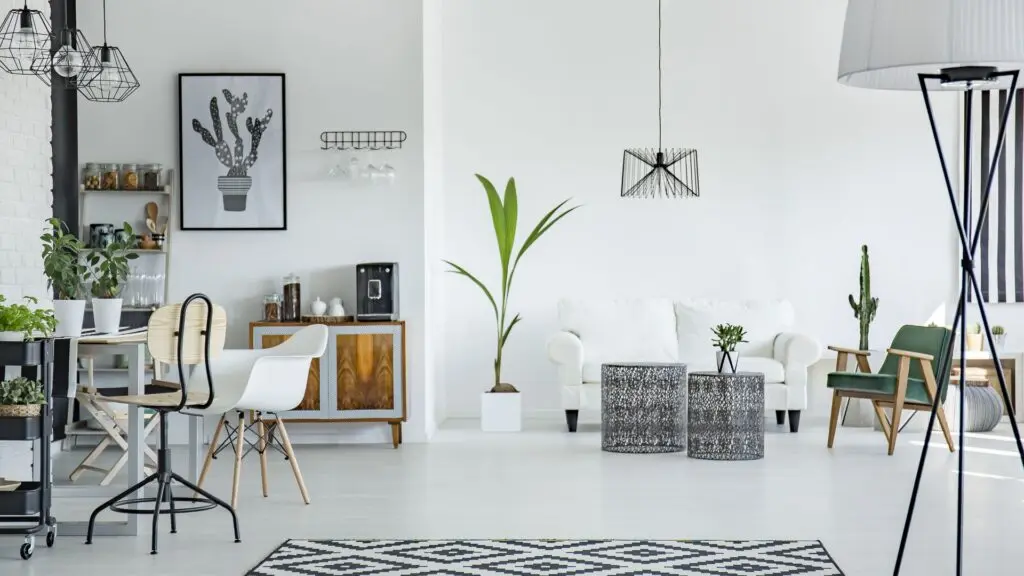
Eco-Friendly Materials for Different Rooms
Living rooms
Keep usable furniture, consider washable upholstery, choose durable flooring and use layered lighting to reduce unnecessary decorative purchases.
Bedrooms
Prioritise comfortable, maintainable textiles, low-emission finishes and storage that reduces clutter without excessive built-ins.
Kitchens
Assess long-life cabinet hardware, repairable joinery, practical benchtops and finishes that tolerate heat, spills and frequent cleaning.
Bathrooms
Choose water-resistant finishes, durable fittings and materials compatible with proper waterproofing and ventilation.
See our residential design services for broader space-planning considerations.
How Much Do Eco-Friendly Interior Materials Cost in Sydney?
There is no reliable single price for eco-friendly interior materials because costs depend on product grade, quantity, installation, freight, substrate preparation and availability. Reclaimed materials may reduce new material demand but require extra labour; premium certified products can carry a higher upfront cost; and retaining an existing finish can sometimes be the most economical option.
When comparing quotes, request the same scope and performance standard for each option. Include preparation, delivery, installation, maintenance and expected replacement cycles—not only the shelf price. A design professional can help identify where spending more on durability matters and where existing items can be retained.
For cost-conscious planning, explore ‘+a(‘budget-friendly-interior-designer-sydney/’,’budget-friendly interior design in Sydney’)+’ and ‘+a(‘affordable-interior-designers-in-sydney/’,’affordable interior design options’)+’.
Our Approach to a More Considered Interior Design Plan
- Understand your home: discuss your layout, lifestyle, rooms, budget and material priorities.
- Audit existing items: identify furniture, finishes and fittings worth retaining or restoring.
- Set design priorities: decide where performance, durability, comfort and appearance matter most.
- Compare suitable products: assess samples, specifications, supplier information and maintenance requirements.
- Plan implementation: coordinate the design intent with qualified trades where required, including compliance and safe installation.
- Care for the result: follow product-specific cleaning and maintenance advice to extend useful life.
Learn more ‘+a(‘about/’,’about Mood Living’)+’, browse ‘+a(‘project/’,’our project portfolio’)+’ or ‘+a(‘get-in-touch/’,’contact our team’)+’ to discuss your brief.
Sydney Homes: Practical Considerations
Sydney homes range from compact apartments and terraces to larger family houses. Material choices should respond to the property rather than follow a universal checklist. In apartments, check strata permissions and acoustic performance. In older homes, allow for existing finishes, substrate conditions and possible hazardous materials before disturbing surfaces. In sun-exposed rooms, consider fade resistance and thermal comfort. In coastal environments, assess moisture and corrosion resistance.
Whether your project is in Parramatta, the Hills District, Inner West, North Shore or elsewhere across Sydney, a durable and maintainable specification is more useful than an attractive product that is unsuitable for the room.
For related styling ideas, read ‘+a(‘modern-interior-design-sydney/’,’modern interiors’)+’ and ‘+a(‘contemporary-interior-design-sydney/’,’contemporary interiors’)+’.
Frequently Asked Questions About Eco-Friendly Interior Materials
What are the most eco-friendly materials for interior design?
There is no universal winner. Reused materials, responsibly sourced timber, low-emission finishes and durable, repairable furnishings are often worth considering. Compare lifecycle impacts and suitability.
Is bamboo always a sustainable material?
Not necessarily. Bamboo grows quickly, but adhesives, manufacturing processes, transport, sourcing and product lifespan still matter. Ask for product-specific documentation.
Are low-VOC paints safer for indoor air quality?
Low-VOC products can reduce certain emissions, but the label does not guarantee zero emissions or eliminate the need for ventilation and correct application.
Can I design a sustainable home on a budget?
Yes. Reusing furniture, repainting rather than replacing, selecting long-lasting finishes and planning purchases can help control costs.
What is the difference between recycled and recyclable materials?
Recycled-content products contain recovered material. Recyclable products may be recoverable after use, depending on local facilities, contamination and construction.
Is reclaimed timber suitable for every room?
No. Suitability depends on condition, species, treatment, moisture exposure, structural requirements and installation details.
Are natural fabrics always better than synthetic fabrics?
Not always. Farming inputs, dyeing, durability, washing and disposal differ by fabric. Consider how long the fabric will last in your home.
What should I ask a supplier about sustainable products?
Ask for material composition, origin, certifications, emissions data, care requirements, warranty, repairability and end-of-life options.
Can an interior designer help with sustainable material choices?
A designer can help coordinate the palette, compare practical options and plan around existing items. Specialist environmental assessments or compliance advice may require qualified professionals.
How do I start an eco-friendly interior design project in Sydney?
Start by defining your goals and budget, assessing what can stay, and prioritising the rooms or finishes that need attention. Then compare appropriate materials and seek project-specific advice.
Bring Thoughtful Material Choices Into Your Sydney Home
Discuss practical, stylish interior design ideas that balance your preferences, your budget and the long-term use of your space.
Contact Mood Living