

2026

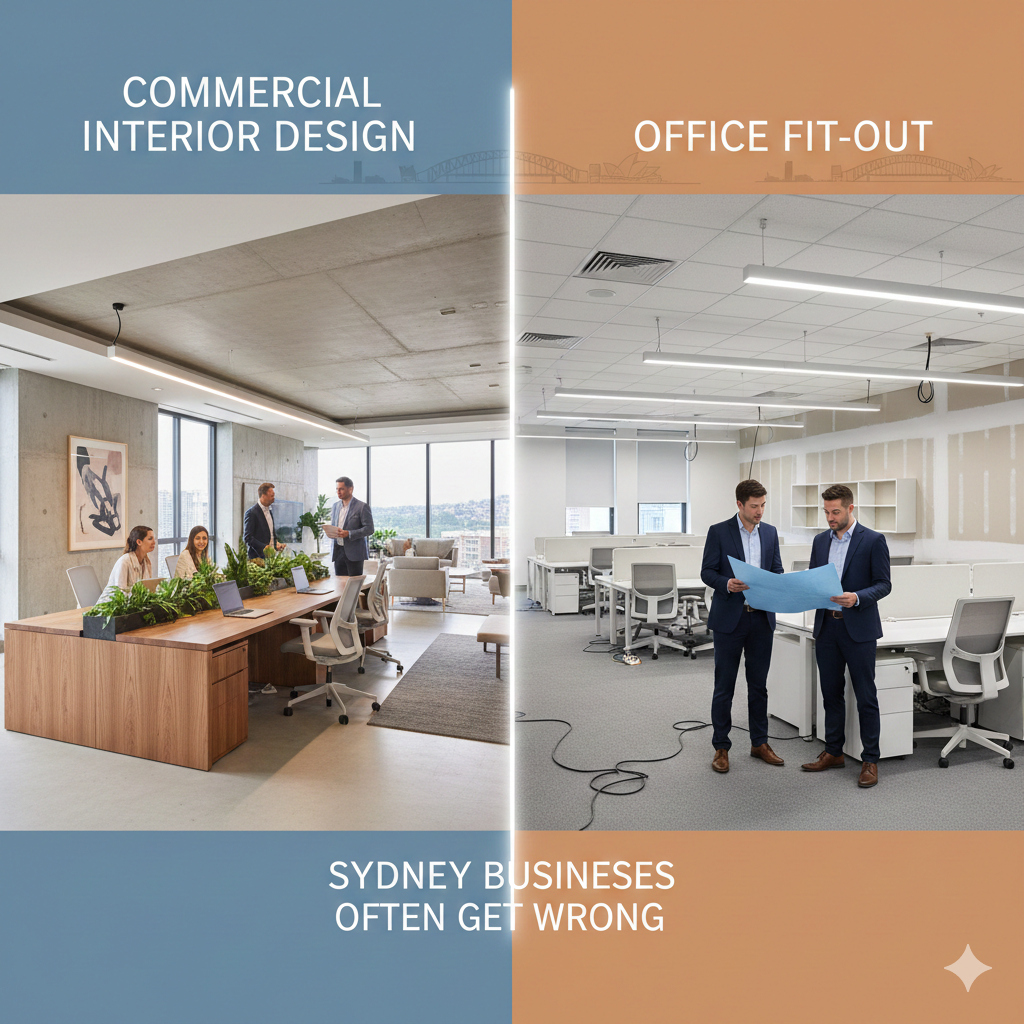
Commercial Interior Design vs Fit-Out: What Sydney Businesses Often Get Wrong

February 10, 2026

In Sydney, the words commercial interior design and commercial fit-out get mixed up all the time.
Even by people who’ve done a few projects already.

We see it in meetings constantly at Mood Living. Someone says, “We just need a fit-out,” and then ten minutes later they’re talking about layouts, finishes, lighting moods, brand feel… which is actually design.

The confusion is normal. But it does matter. A lot more than people think.

So instead of textbook definitions, let’s talk about how this plays out in the real world — especially in Commercial Interior Design Sydney projects.

Commercial Interior Design Is the Thinking Before Anything Gets Built

Commercial interior design is the part no one sees at first — but everyone feels once the space is done.

It’s not just about making a place look good. If that’s all it was, Pinterest would replace designers by now.

In reality, commercial interior design is about questions like:

  • How will people move through this space every day?

  • Where will things slow down or get messy?

  • What happens when the team grows?

  • Will this still work in three years?

A good commercial interior designer in Sydney spends a lot of time not drawing.
They’re listening, watching, measuring, and thinking.

Office layouts, for example, look simple until you actually work in one. Noise travels. Storage disappears. Meeting rooms are never in the right place. These are design problems, not construction ones.

That’s why businesses that invest in proper commercial interior designers Sydney usually end up with spaces that feel calmer, easier, and more intentional — even if you can’t quite explain why.

Commercial Fit-Out Is Where Reality Kicks In

A commercial fit-out is the physical work. This is where walls go up, lights get installed, floors go down, and deadlines start feeling very real.

When people talk about commercial office fit outs, they’re usually referring to:

  • Partitioning and construction

  • Electrical and data

  • Plumbing and services

  • Joinery, ceilings, flooring

  • Final finishes and furniture install

Fit-out teams are builders, trades, and project managers. They’re focused on how something gets done safely, correctly, and within budget.

But here’s the key thing:
Fit-out teams work best when the decisions have already been made.

Without proper design drawings, fit-outs turn into guesswork. And guesswork on a construction site is expensive.

Why the Confusion Happens

Sydney is fast. Leases are tight. Opening dates matter. So businesses rush.

A lot of clients think:

  • Fit-out includes full design

  • Design is just “choosing colours”

  • They’ll figure things out on site

And sometimes, they do… badly.

What usually happens is the fit-out starts, then halfway through someone says, “This doesn’t feel right,” or “We should’ve added another meeting room,” or “The reception feels too small.”

At that point, changes cost time and money.

This is why commercial fit out Sydney projects run smoother when design leads the process, not the other way around.

Design and Fit-Out Aren’t Opposites — They’re Linked

It’s not a competition. One isn’t “better” than the other.

Design without fit-out is just ideas.
Fit-out without design is just construction.

When they’re aligned, projects feel controlled. When they’re not, everything feels reactive.

At Mood Living, we see the biggest wins when commercial interior design and fit-out are treated as one continuous journey — not two separate tasks handed between strangers.

About Costs

A common fear is that interior design will “blow the budget”.

In reality, the opposite is usually true.

Clear design decisions:

  • Reduce site changes

  • Avoid over-ordering materials

  • Prevent layout mistakes

  • Speed up approvals

Fit-outs become more predictable when the design is locked in early. That’s especially important in Sydney, where delays quickly turn into lost revenue.

Which Should You Do First?

Always design first. Always.

Even if you’re working with an existing space.
Even if the budget is tight.
Even if it feels like “overkill”.

Commercial interior design gives you a plan. Fit-out follows the plan.

Skipping that step is like starting a road trip without checking the route — you’ll still arrive somewhere, just maybe not where you wanted.

The Sydney Reality Most People Don’t Talk About

If you’re planning a new office, retail space, or commercial environment:

  1. Start with commercial interior design

  2. Lock the big decisions early

  3. Then move into fit-out with clarity

Whether you’re doing a full office renovation or a modest upgrade, understanding this difference will save you stress — and usually money too.

At Mood Living, that’s how we approach every project. Thought first. Build second. No shortcuts
Common Interior Design Mistakes Sydney Homeowners Make

February 6, 2026

Let’s clear something up first.

Most people don’t get interior design wrong because they don’t care or don’t have taste. They get it wrong because designing a home looks much easier than it actually is. A few reels, a saved Pinterest board, and suddenly it feels like everything will just fall into place.

It usually doesn’t.

Sydney homes have their own personality. Light changes fast. Space can feel generous on paper and tight in reality. And what works in one suburb or home type can feel completely off in another. Over time, a few common mistakes keep showing up — and they’re surprisingly easy to make.

Designing for How It Looks, Not How It’s Used

This is probably the biggest one.

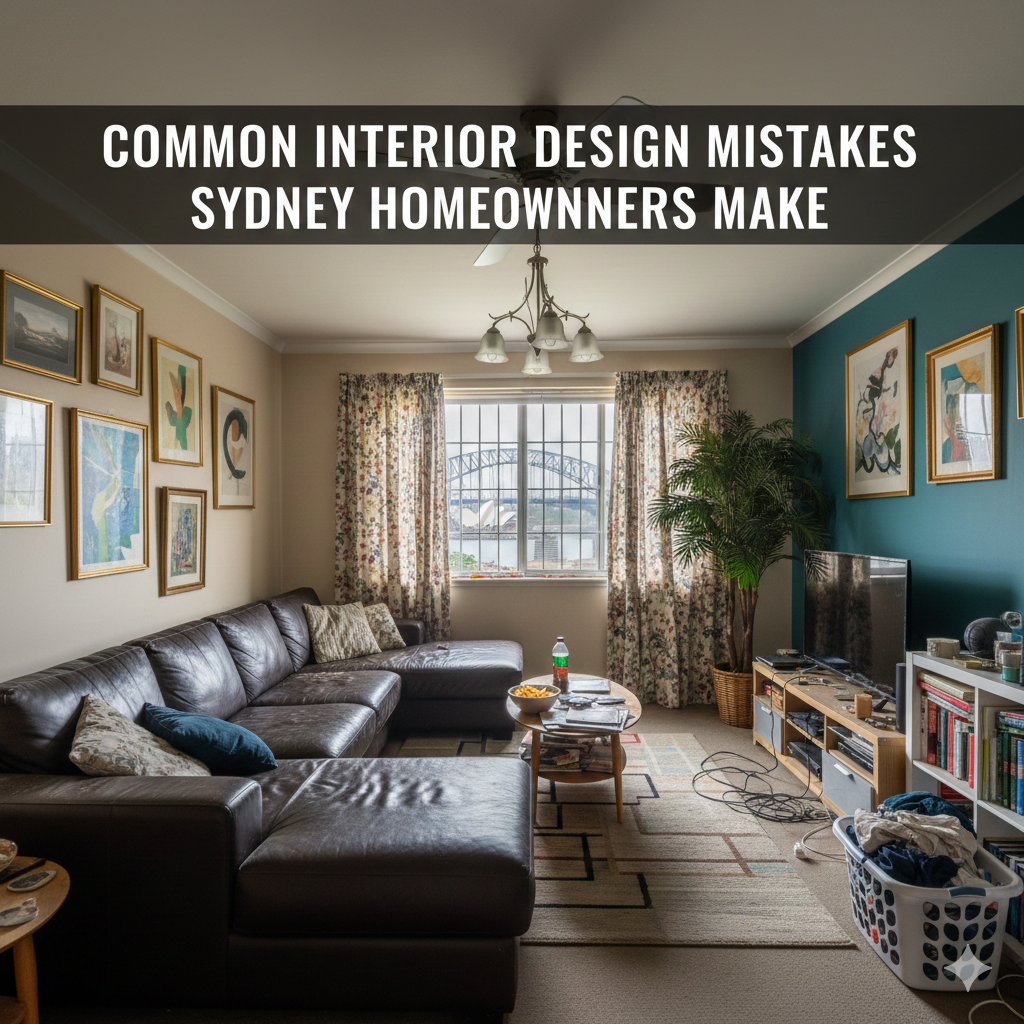
Homes are often designed to look impressive, not to be lived in. White sofas, delicate finishes, open shelving everywhere — it all looks great until real life moves in.

Kids, guests, pets, long workdays. Suddenly the space feels stressful instead of relaxing.

Good design should quietly support daily life. You shouldn’t have to “maintain” your interior every single day just to keep it looking decent.

This is where professional interior design services in Sydney can make a real difference — not by making things fancy, but by making them practical without losing style.

Underestimating How Important Natural Light Is

Sydney has great natural light, but many homes don’t use it properly.

Heavy curtains. Dark colours in already dim rooms. Furniture pushed right up against windows. Sometimes people choose finishes before really understanding how light moves through the house.

And light matters more than most people realise. It affects mood, colour, even how spacious a room feels.

Before locking in paint or materials, it helps to spend time in the space during different parts of the day. Morning, afternoon, evening. What looks perfect at noon might feel completely different later.

Furniture That Doesn’t Fit the Space

This happens a lot, especially in apartments and townhouses.

Furniture looks fine in the showroom. Then it arrives and suddenly the room feels cramped, or awkward, or just uncomfortable to move around in. In other cases, furniture is too small and everything feels unfinished.

Sydney homes often require smarter sizing choices, not bigger ones.

Measuring properly isn’t exciting, but it avoids regret. Mapping furniture out on the floor first can save money, effort, and a lot of frustration later.

Treating Lighting as an Afterthought

One ceiling light is not a lighting plan.

Many homes rely on harsh overhead lighting and nothing else. The result? Spaces that feel cold at night and flat during the day.

Lighting should be layered. A mix of general light, task lighting, and softer ambient options. Lamps, wall lights, warmer tones — all of this adds depth.

When lighting is done well, you don’t really notice it. You just feel comfortable.

Forgetting About Storage Until Clutter Takes Over

This mistake doesn’t show up right away.

At first, everything looks clean. Then bags appear. Shoes pile up. Random items start living on chairs and benches. And suddenly the space feels messy, even though nothing “changed.”

Many Sydney homes don’t have endless storage, so planning for it early matters. Built-in storage, concealed cabinets, and multi-purpose furniture can quietly keep a home feeling calm.

It’s not glamorous, but it’s essential.

Making Everything Match Too Much

Matching everything sounds safe. Same colours, same finishes, same style everywhere.

But overly matched interiors often feel flat. Almost showroom-like. There’s no warmth, no personality.

Real homes usually have contrast. Texture. A few things that don’t perfectly align but somehow work together.

A space should feel collected over time, not assembled in one go.

Poor Layout Planning in Open-Plan Homes

Open-plan living is popular across Sydney, but it’s easy to get wrong.

Without proper zoning, furniture placement feels random. Walkways get blocked. Seating areas feel disconnected.

Layout planning is about how people move and interact, not just where furniture looks best in photos.

This is one area where experienced designers, like the team at Mood Living, focus heavily — making sure the space flows naturally and actually works day to day.

Avoiding Professional Help to Save Money

Trying to save money by skipping design advice is understandable. But fixing mistakes later usually costs more.

Repainting walls. Replacing furniture. Redoing layouts. These things add up fast.

Even limited guidance from professionals offering interior design services in Sydney can prevent costly errors early on.

You don’t always need a full-service package. Sometimes a single consultation is enough to steer things in the right direction.

Choosing Style Over Comfort

A chair can look amazing and still be terrible to sit on.

A bed frame can be stylish and still hurt your legs every morning.

Comfort isn’t boring. It’s what turns a house into a home.

This balance between comfort and aesthetics is something Mood Living pays close attention to — because no design is successful if it looks good but feels wrong.

Final Thoughts

Interior design mistakes happen to almost everyone. They’re part of the process.

The key is not trying to create a “perfect” home, but a home that actually fits your lifestyle. Sydney homes have so much potential when design decisions respect space, light, and daily habits.

If you’re planning a renovation or refresh, taking time — or getting guidance from trusted interior design services in Sydney — can save stress later.

And remember, the best homes don’t impress strangers online.
They make the people living inside them feel at ease.